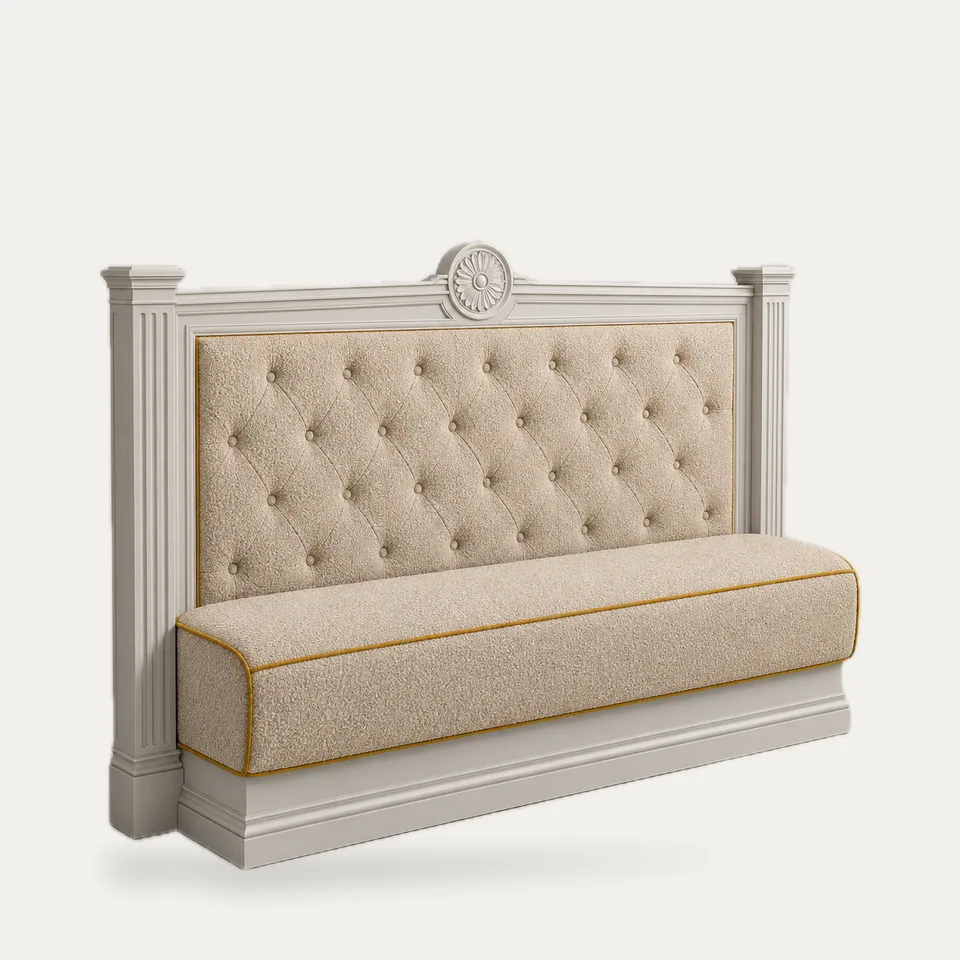
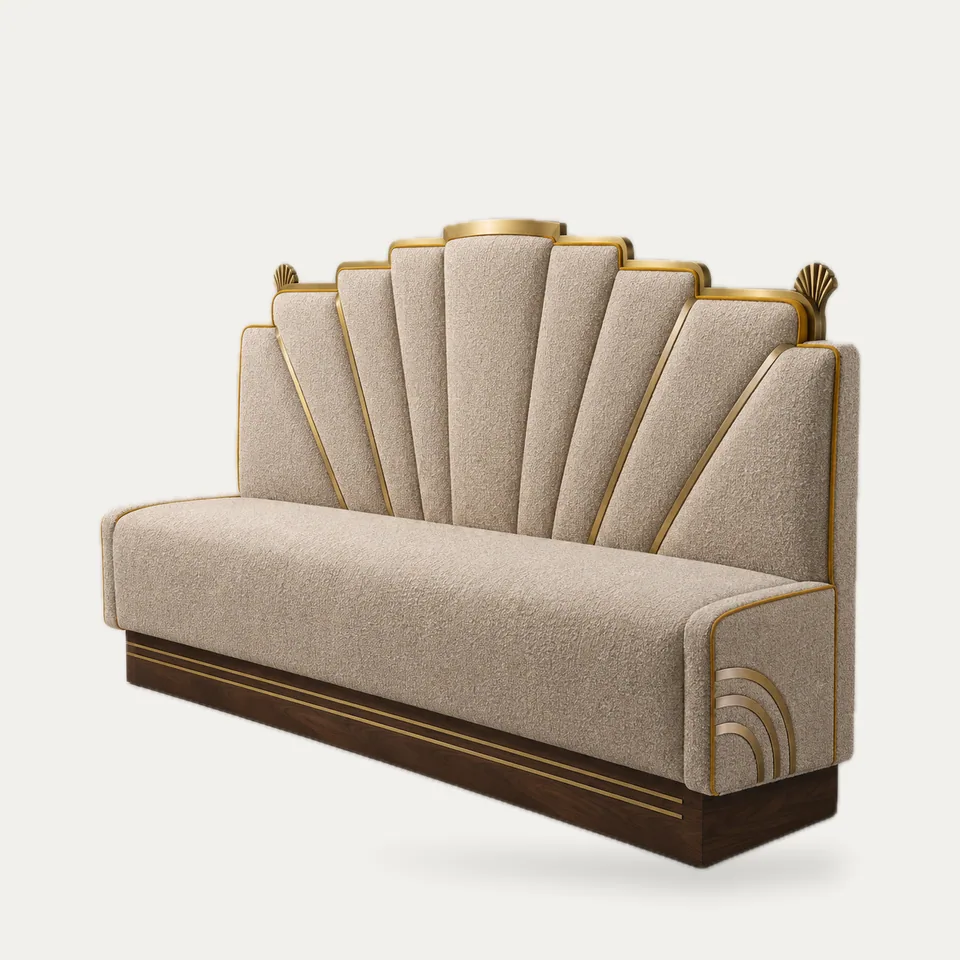
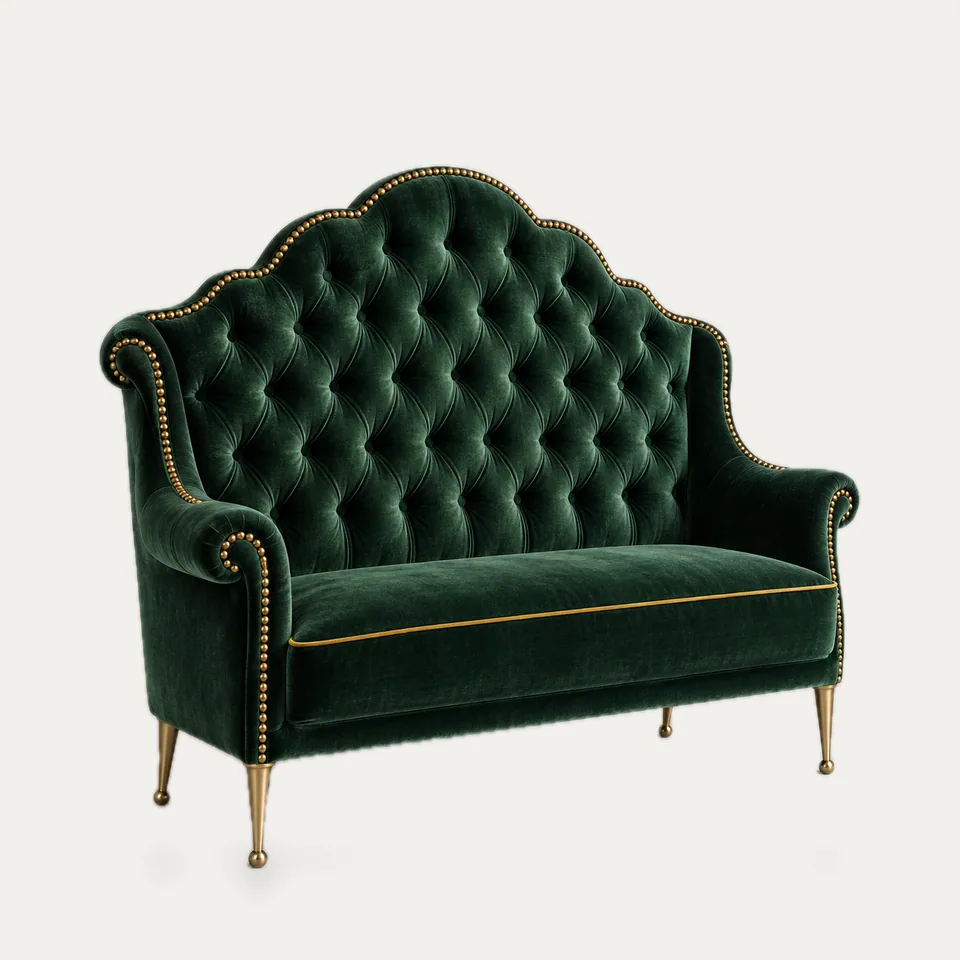
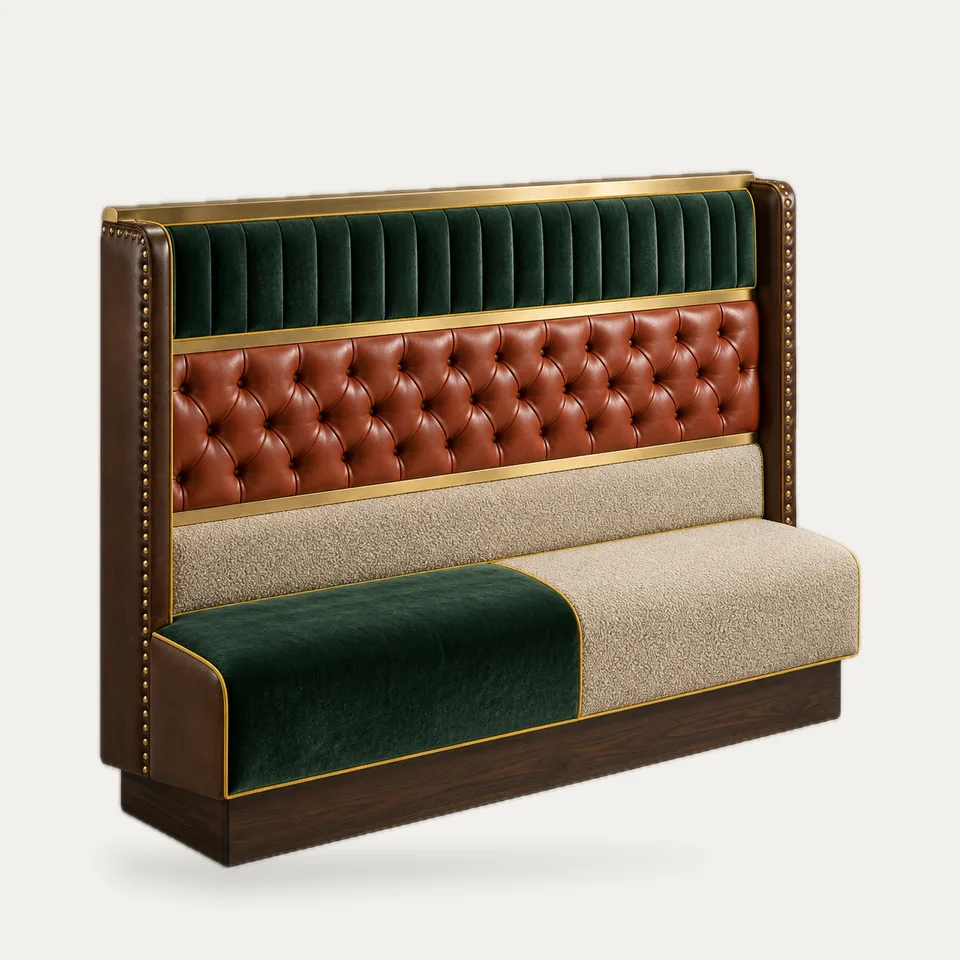
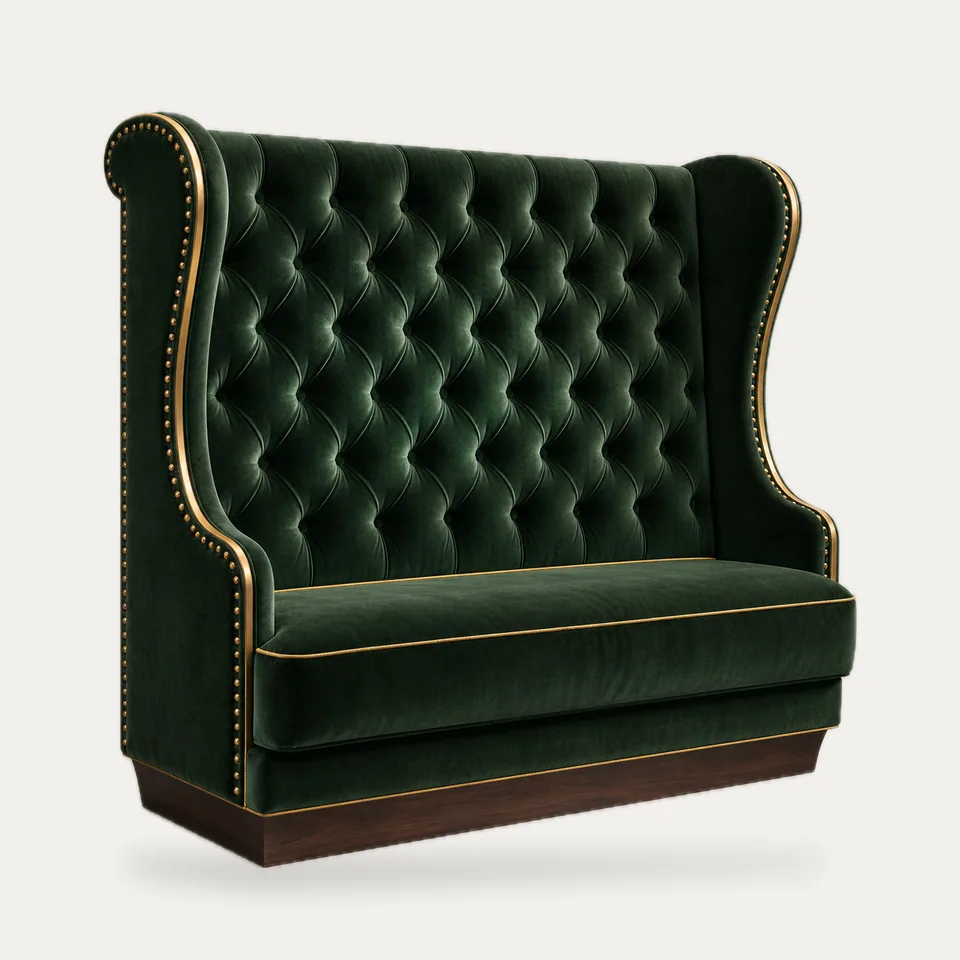
Period booths are for rooms with a point of view: a hotel grill with plaster cornicing, a members' dining room, a jazz-age cocktail bar with a kitchen. Each design keeps the historic signature that guests recognise, and rebuilds everything underneath to commercial standards.
The signatures, and what they demand from the maker
| Design | Historic signature | Making detail that matters |
|---|---|---|
| Sunburst Deco | Stepped fan back, concentric brass arcs | Three upholstered tiers with brushed-brass strips at each step |
| Neoclassical Pilaster | Moulded frame, fluted pilasters, carved medallion | Three-step timber moulding with mitred 45° corners |
| Regency Scallop | Scalloped crest, deep buttoning, close-nailed brass | Nail heads set at tight, even centres along the curve |
| Layered Maximalist | Three materials in bands | Brass dividers and welts holding velvet, leather and bouclé in order |
| St James Club | Scroll arms, deep-buttoned velvet | Scroll arm continuing from full back height down to the seat |
Practical notes
Deep buttoning traps crumbs; we recommend it on backs and end faces rather than seats, and specify buttons tied through to the frame so they survive service. Close-nailing is done by hand and adds time; your quote confirms it. Moulded and carved timber is made in solid hardwood or hardwood-faced ply, finished in lacquer or paint to sample.
Standard sections are 150–160 cm long with back heights between 120 and 135 cm, which gives these booths their presence in a high-ceilinged room. Pair them with our dining and lounge chairs on the open side of the table.